Crows, Symbolism, and the Attempted Murder Meme: Everything You Need to Know
Crows have always fascinated people, not just for their intelligence but for the mysteries and legends attached to them. From old folktales to modern memes, these birds have built a reputation that is equal parts eerie, clever, and unexpectedly humorous. One moment they appear in spiritual symbolism or ancient rhymes, and the next they are starring in viral internet jokes like the "attempted murder" meme.
This blog explores every corner of crow mythology and meaning, from what a flock is called to what it means when you see one, two, or many, and even why the term "murder of crows" exists in the first place. Whether you are here for folklore, fun facts, spiritual interpretations, or simply because you saw two crows on a T-shirt and wondered about the joke, this guide covers it all.
What Is a Flock of Crows Called?
When people talk about crows gathering in groups, the term that usually comes to mind is the famous "murder of crows". It is one of the most striking collective nouns in the English language, and it has been around since the Middle Ages. In hunting manuals from the 1400s, you can already find it listed among other colorful names, part of a tradition where people enjoyed giving animal groups dramatic or poetic titles. Crows earned this particular label because they were often seen lingering around battlefields, gallows, and graveyards, which made medieval observers associate them with death and misfortune.
Despite how grim the term sounds, it does not reflect the crow's true nature. Modern wildlife scientists simply call them a flock, just like geese or sparrows. Over the centuries, people added other fanciful names as well, including a parcel, horde, parliament, or even a storytelling of crows. Still, "murder of crows" is the one that survived in everyday language, partly because it is so vivid and partly because the bird itself carries centuries of mysterious symbolism.
What Is the Attempted Murder Meme?
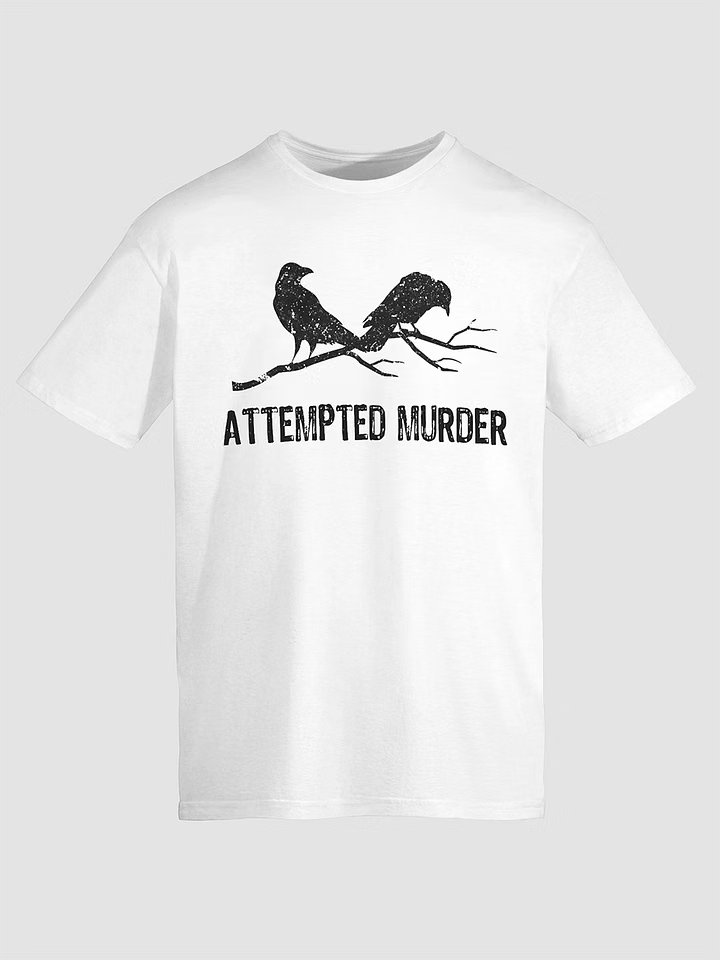
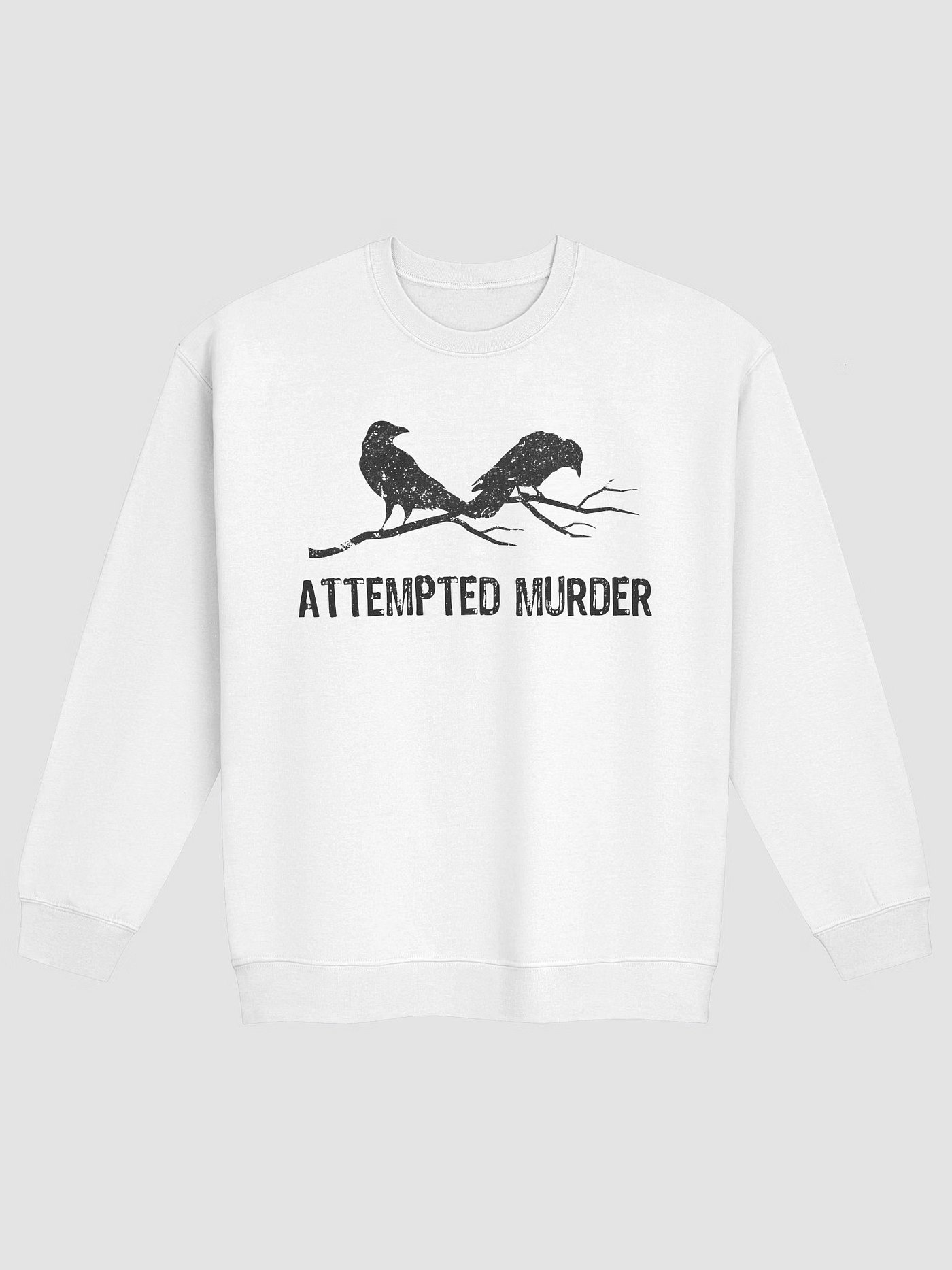
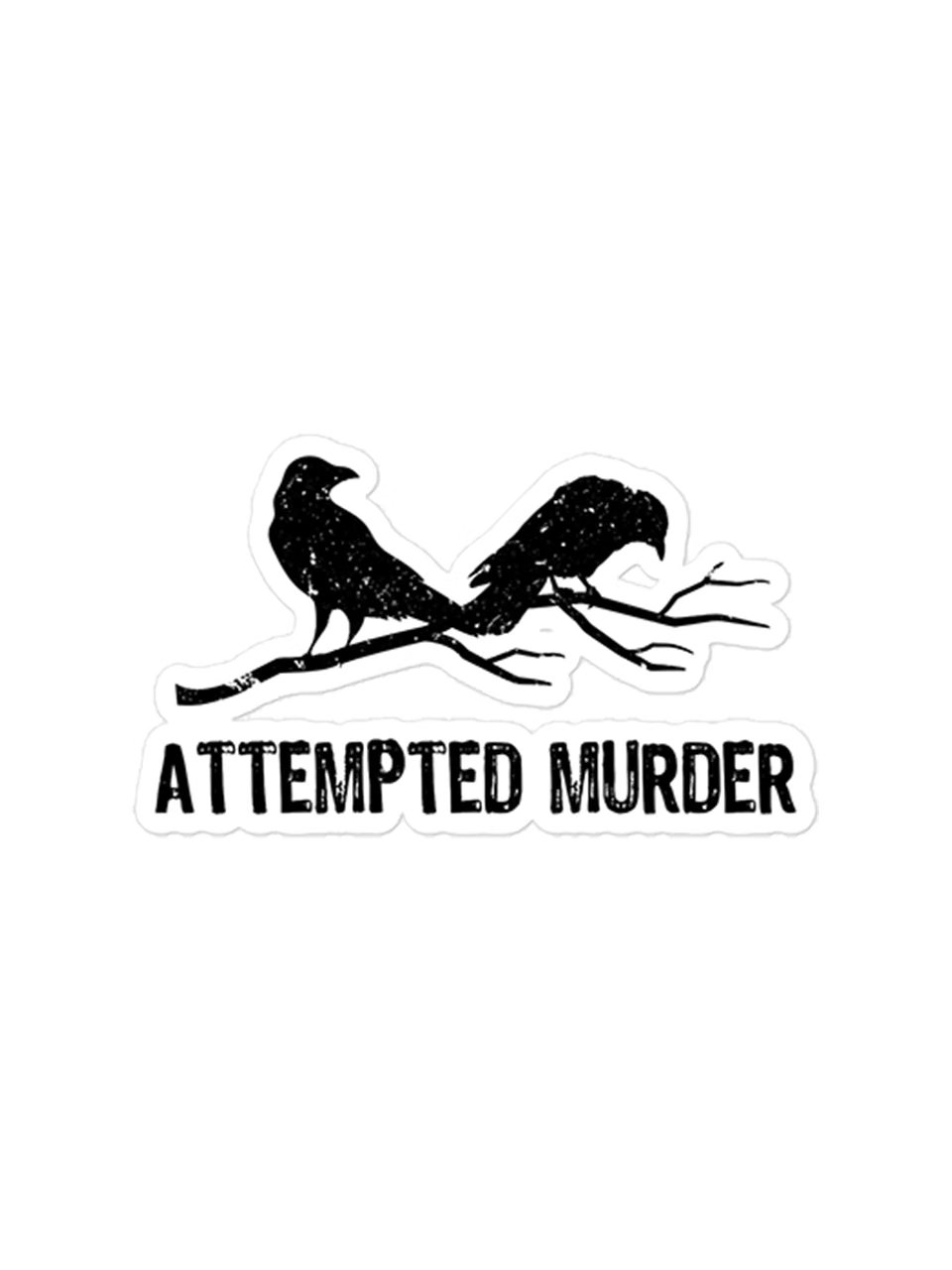
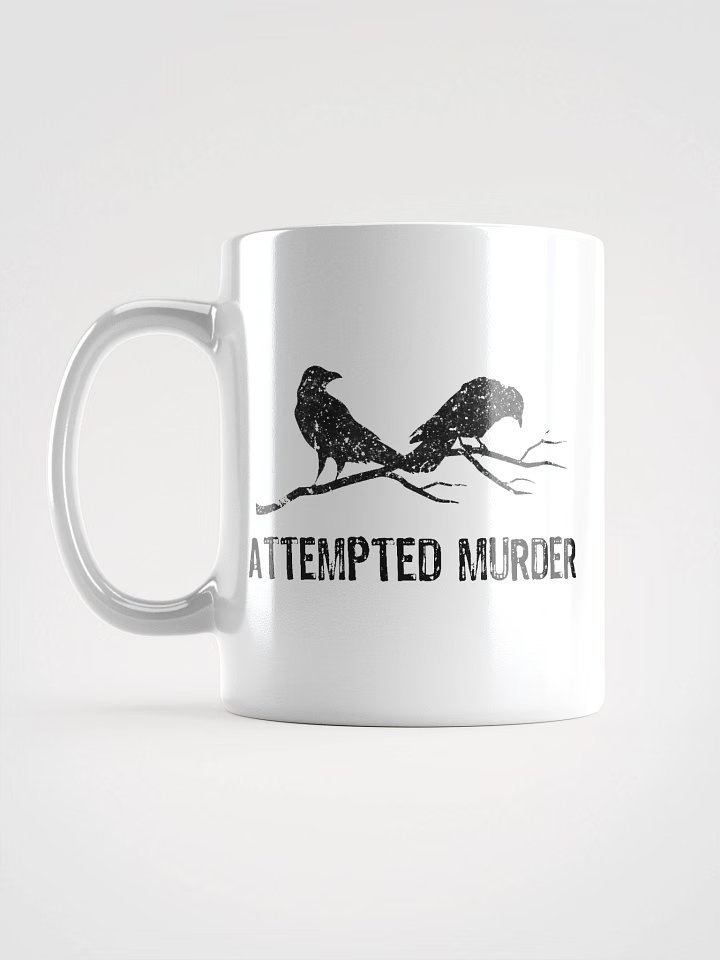
The "attempted murder" meme grew out of the dramatic history of that collective noun. Once the internet discovered that a group of crows is called a murder, the joke practically wrote itself: if a full group is a murder, then two crows must be an attempted murder because they are not quite enough birds to qualify. The humor comes from the absurd contrast between a pair of harmless birds sitting together and a phrase that usually belongs in a crime drama.
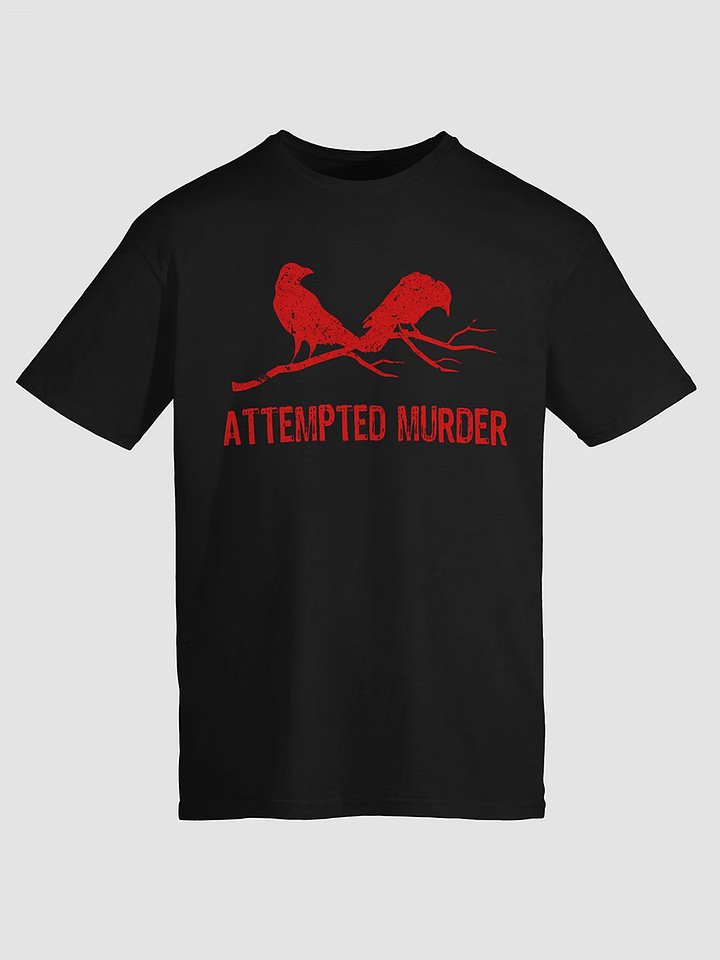
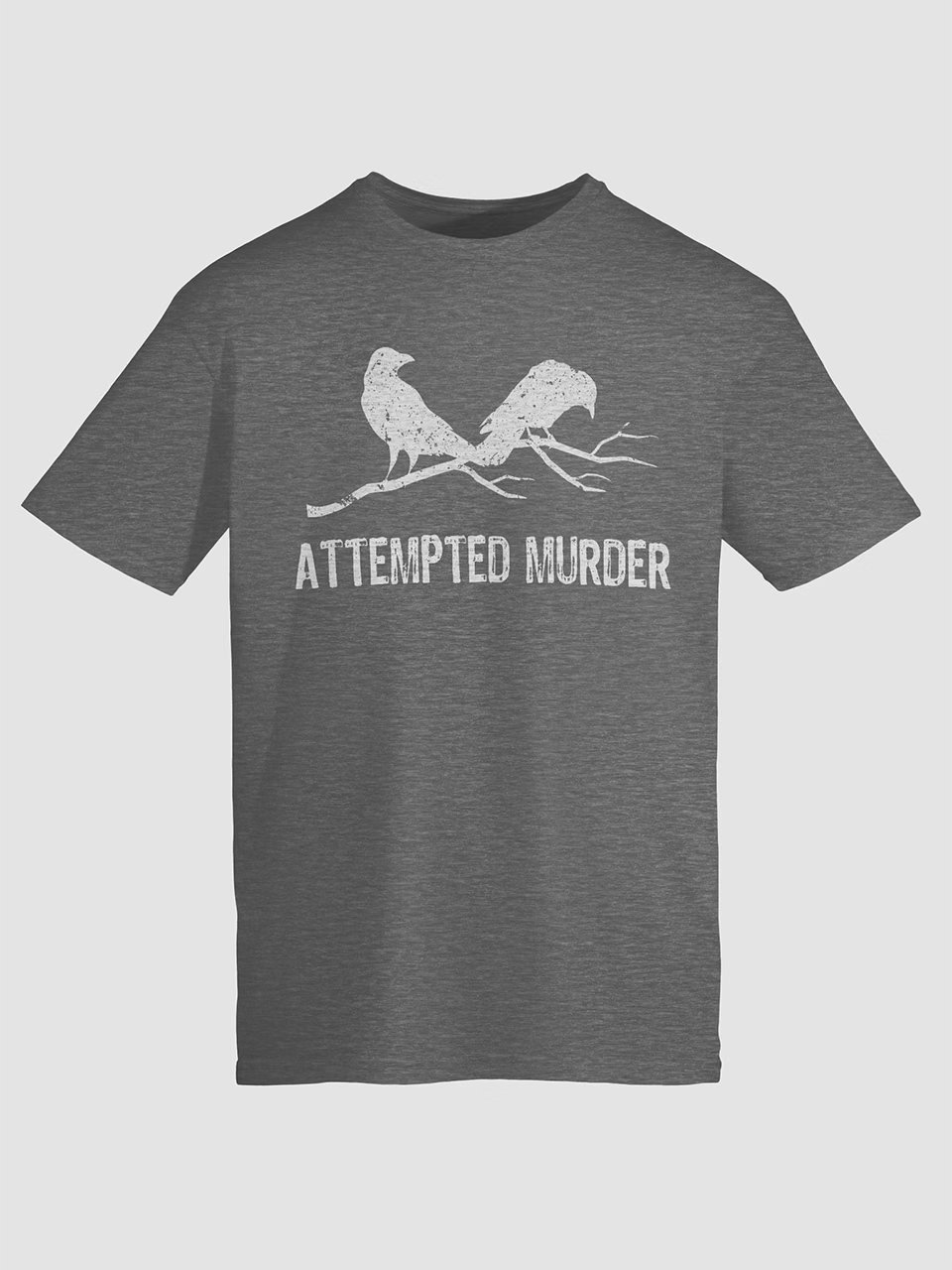
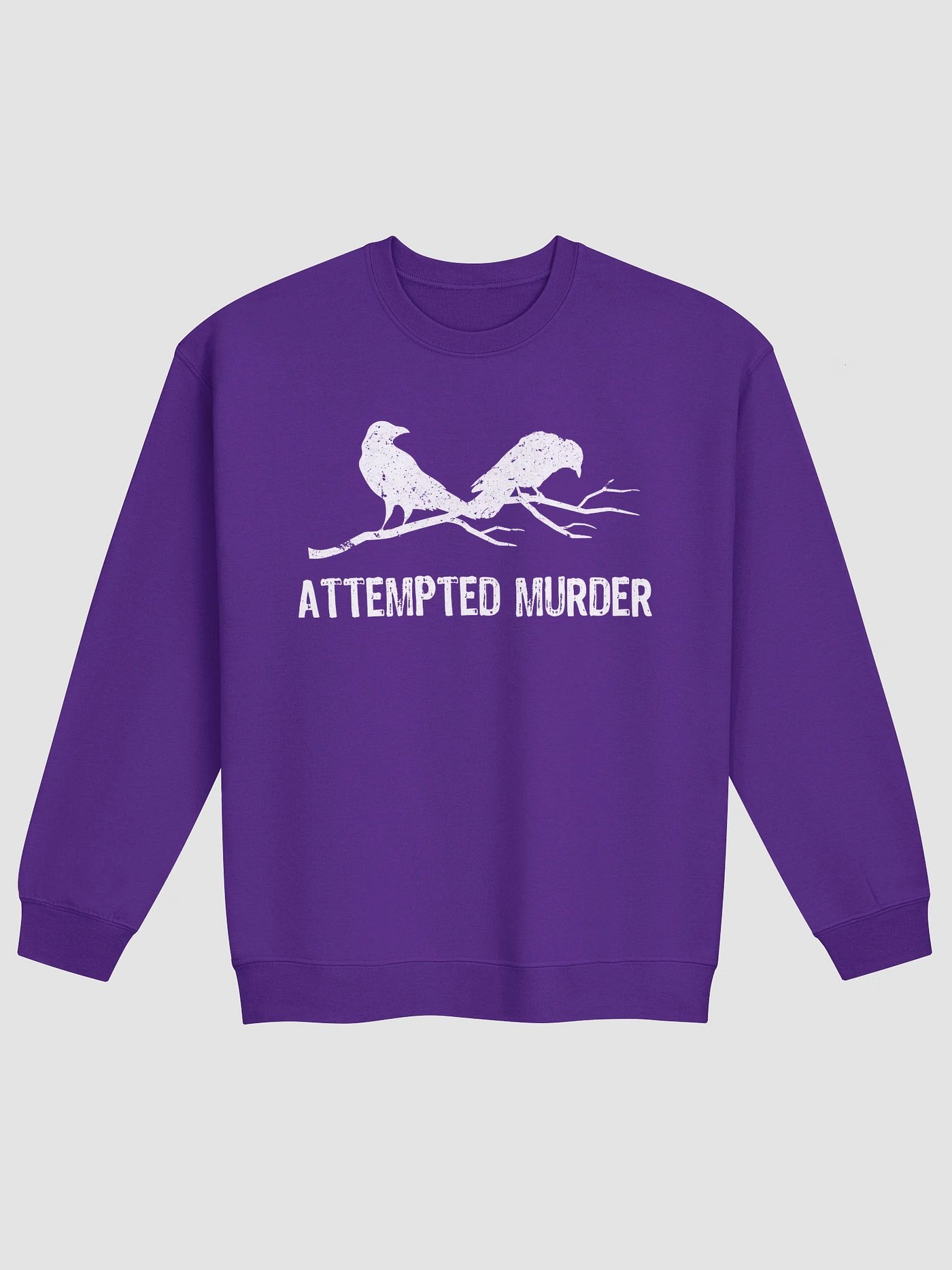
The meme shows up everywhere: t-shirts, sweatshirts, stickers, mugs, reaction images, cartoons, and posts where two crows perch side by side with the caption proudly declaring "Attempted Murder". It became popular because it blends a surprising bird fact with a bit of dark humor. People enjoy the twist, and anyone who knows the trivia feels instantly in on the joke. This simple format spreads quickly online: no long explanation is needed. You see two crows, recognize the pun, and get that little "aha" moment as the joke clicks into place.
What Do Crows Symbolize?
Crows have carried symbolic weight for centuries, and their meaning often depends on the culture interpreting them. They are frequently associated with mystery and the unknown, partly due to their black feathers and haunting calls. Many traditions link them to death or bad omens, especially in folklore where they appear near graveyards or accompany scenes of tragedy.
But that is only one side of their symbolism. Crows are extraordinarily intelligent, able to solve complex problems and remember human faces. Because of this, they often represent insight, wisdom, and cleverness. Some spiritual interpretations say that crows symbolize transformation, the end of one chapter and the beginning of another, much like how they turn what is dead into nourishment. Their ability to adapt to almost any environment also gives them meanings tied to resilience, versatility, and inner strength. In short, crows sit at the intersection of mystery and brilliance, carrying a dual symbolism that reflects both darkness and wisdom.
What Does Seeing One Crow Mean?
Seeing a single crow can be interpreted in several ways, and the meaning changes depending on cultural background. In practical terms, a lone crow might simply be scouting for food or watching the area. Yet folklore often treats a solitary crow as something more symbolic. One famous old rhyme begins "one for sorrow", suggesting that a single crow brings misfortune or signals something out of balance. In certain European traditions, a lone crow crossing your path was read as a bad omen.
Modern spiritual interpretations take a different approach. Instead of focusing on misfortune, they see a single crow as a reminder to be alert and pay attention. Because crows are intelligent and observant, one crow appearing alone could symbolize a message or a call to reflect inward. Native American stories sometimes describe a solitary crow as a guardian or messenger who brings awareness rather than fear. Whether the interpretation leans dark or introspective, the sight of one crow often encourages people to look more closely at their surroundings or current situation.
What Does Seeing Two Crows Mean?
When people spot two crows together, the mood of the symbolism usually shifts. In old rhymes, two crows are linked with joy, and many modern interpretations agree that a pair represents harmony, partnership, and good news. A duo of crows can symbolize balance or supportive relationships, much like two companions navigating the world together.
From a natural perspective, seeing two crows is not unusual at all. They form strong family bonds, and young birds often remain with their parents for months, helping raise new offspring. Because of this, two crows together often signal cooperation and social connection rather than anything mystical. Over time, these meanings blended with internet culture, which added a humorous twist through the "attempted murder" meme. Beyond the joke, however, many people still see two crows as a positive sign, whether connected to luck, companionship, or a period of uplifting change ahead.
You can explore the Attempted Murder collection inspired by the image of two crows standing next to each other:
What Does a Flock of Crows Mean Spiritually?
A flock, or murder, of crows can make a powerful impression, especially when dozens gather in the sky or settle into trees at dusk. Spiritually, many people interpret such a gathering as a symbol of collective wisdom, transformation, or a significant life shift. Crows are highly social birds that work together, share information, and warn each other of danger. This cooperative behavior has inspired spiritual meanings tied to community, teamwork, and strength in numbers.
Some traditions view a large group of crows as a sign that a message or lesson is approaching. Because crows are often linked to the unseen world, a flock may suggest that guidance or insight is near, nudging someone to consider the bigger picture of their life. Others interpret it as an invitation to embrace change and move forward. Whatever the viewpoint, encountering many crows at once tends to carry a sense of gravity and meaning, as though something larger than everyday routine is unfolding.
Why Is a Group of Crows Called a Murder of Crows?
The origins of the phrase lie deep in medieval superstition. Crows were often spotted around places associated with death, such as battlefields and hanging sites, and this led people to link them with darkness, bad omens, and misfortune. In that era, English speakers enjoyed inventing vivid names for groups of animals, and "murder of crows" captured the somber reputation these birds carried.
Folklore also contributed tales of "crow courts", mythical gatherings where crows judged one of their own. While this kind of dramatic punishment is largely a story rather than a biological fact, such legends reinforced the idea that crows were creatures connected to death and judgment. Over time, the phrase stuck, even though the birds themselves are far more peaceful than their name suggests. Today, the term survives mostly because it is memorable and poetic, a blend of old superstition and linguistic flair.
How Many Crows Are in a Murder of Crows?
Interestingly, there is no official number required for a group to be called a murder. In casual usage, any group of three or more crows can qualify. Crows often travel in small family units, but during feeding times or seasonal roosting they can gather by the dozens, hundreds, or even thousands. In winter, for instance, urban roosts can swell into enormous groups where the birds gather for warmth and protection.
The term murder is flexible and poetic rather than scientific. Bird experts refer to any group simply as a flock, and there is no threshold that must be reached before the dramatic label applies. Still, for everyday conversation, even a small cluster of crows can be called a murder if someone wants to use the traditional term.
Explore more of the Attempted Murder clothing collection:

Do Crows Mourn Their Dead?
People often notice that when a crow dies, other crows gather around the body. They may call loudly, circle above, perch nearby, or spend several minutes inspecting the scene. To a casual observer, this can look like a funeral, and in many ways it resembles mourning behavior. Scientists, however, interpret these gatherings in a more practical light.
Crows are highly intelligent and extremely cautious, and they learn by watching. When they encounter a dead member of their group, they treat the situation as a lesson. The flock studies the area to determine what happened, whether a predator is nearby, or if there is some hidden danger in the environment. This type of "funeral" appears emotional, but it is primarily a survival strategy that helps crows avoid threats in the future.
Still, the behavior shows something remarkable. Even if crows are not grieving in the human sense, they understand that death carries information. Their reaction highlights how socially complex these birds are. They communicate, investigate, and share knowledge, turning a moment of loss into a communal learning event.
Will a Crow Attack a Chicken?
Crows have a reputation for being clever opportunists, but they are not usually aggressive toward adult chickens. A healthy hen can stand her ground, and crows generally prefer to avoid risky fights. What they do enjoy, however, are easy meals. They may steal unattended eggs, pick at leftover feed, or snatch tiny chicks that cannot defend themselves.
Farmers who keep chickens often report that crows act like extra security guards. They make loud alarm calls when they spot predators such as hawks or foxes, and these warnings benefit the entire flock. While crows might take advantage of an open coop or an unguarded nest, they are far more likely to help deter dangers than to create them.
If you want to protect chicks and eggs, a simple covered run or enclosed nesting box is usually enough. Adult chickens rarely need protection from crows at all. As long as the vulnerable young are safe, crows and chickens can coexist peacefully and even help each other through shared awareness of threats.
Do Crows Have Any Predators?
Even though crows are smart and adaptable, they are not without enemies. Their biggest threats come from above. Hawks, eagles, and falcons are skilled hunters that can snatch a crow in flight. At night, owls become the primary danger, especially great horned owls, which are powerful enough to take adult crows from roosts. This nighttime threat is one reason crows often sleep together in large communal roosts. Safety comes in numbers.
Young crows face additional risks. Raccoons, foxes, coyotes, and even snakes can raid nests for eggs or nestlings. Ravens, which are larger relatives, sometimes attack crow nests as well. Although adult crows are harder to catch, they are not completely safe. Humans also rank among their top predators through intentional hunting, poisoning, or vehicle collisions.
Despite all of this, crows thrive because they cooperate. They mob predators, share alarm calls, and use their intelligence to avoid danger. Their social structure gives them an advantage that many other birds do not have, which is why crow populations remain strong in both wild and urban environments.
Why Are There So Many Crows Around My House?
If your home has become a hotspot for crows, it often comes down to food, shelter, or safety. Crows are quick to spread the word when they discover an easy meal. Open trash cans, pet food left outside, fruit trees, compost piles, and even insects in your yard can attract them. Once one crow finds something appealing, it may call others to join in.
Another common reason is roosting. Crows gather in massive flocks at dusk, sometimes hundreds or thousands strong, especially in winter. If your neighborhood lies along their route to a communal roost, you may see a surge of activity every evening as they travel together.
Crows may also gather to mob predators. If a hawk, owl, or other danger is nearby, crows will recruit help and swarm the area with loud calls. This behavior can make it look like dozens of birds suddenly appeared from nowhere.
In short, your home might simply be in a convenient location that offers food, tall trees, or a safe place to meet. Reduce accessible food if you want fewer visits. Otherwise, consider it a sign that your environment is thriving enough to support one of the most intelligent birds in nature.
How Long Do Crows Usually Live?
Crows live surprisingly long lives compared to many other wild birds. In nature, the average lifespan of an American crow is about seven or eight years. Many young crows never reach adulthood due to predation or environmental challenges, so surviving those early years is the hardest part.
Once they become adults, however, crows can live far longer. It is not unusual for them to reach their teens in the wild. A few documented individuals have lived more than twenty years. In captivity, where food is reliable and predators are absent, crows can reach twenty to thirty years of age.
Their longevity is closely tied to their intelligence. Crows learn which areas are safe, remember faces, communicate with their group, and adapt quickly when conditions change. These abilities allow them to navigate a dangerous world better than most birds their size.
Who Wrote the Book A Murder of Crows?
The phrase "a murder of crows" is so striking that many authors have used it as a book title, which means there is no single definitive answer. Several unrelated works share the name.
One of the best known is A Murder of Crows by Sarah Yarwood Lovett, a modern British mystery novel that blends crime investigation with wildlife themes. Another novel with the same title comes from Canadian writer David Rotenberg, who used it for one of the books in his Junction Chronicles series. Thriller and mystery authors like Ian Skewis have also published works under this title.
There is also a similar but distinct title, Murder of Crows, by Anne Bishop, a well known entry in her fantasy series The Others.
Because the phrase is so evocative, authors across genres keep returning to it. It is not only popular in books but also featured on crow-themed merchandise, often appearing on t-shirts, sweatshirts, stickers, mugs, and other items.
Conclusion
Crows may be wrapped in centuries of symbolism, but they are also part of everyday life: intelligent, social, adaptable, and far more complex than their dark reputation suggests. Whether you encounter a single crow, a pair perched together, or a large flock swirling above the trees, each sight carries its own blend of natural behavior, cultural meaning, and a touch of humor.
The internet has given these birds a new kind of fame, turning the dramatic phrase "a murder of crows" into playful memes and creative merchandise. Yet behind the jokes, the real birds remain deeply intriguing, from their problem-solving abilities to their strong family bonds and their important roles in the ecosystem.
Understanding crows means appreciating both the legends that shaped their image and the real traits that make them extraordinary. Whether you see them as symbolic messengers, spiritual guides, or simply intelligent birds going about their day, crows continue to inspire curiosity and capture the imagination in ways few animals can.